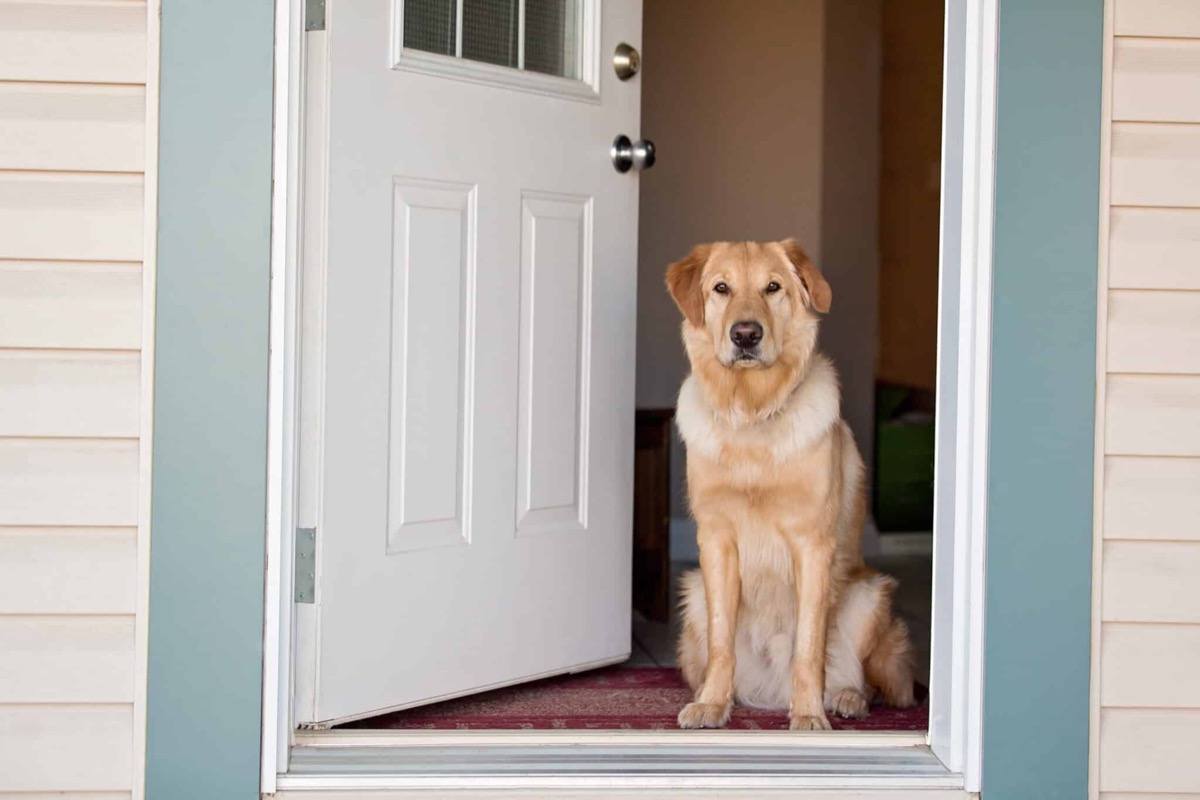
A security system that can't tell the difference between an intruder and your dog getting up for water at 2am isn't just annoying — repeated false alarms train you to ignore real alerts, and some monitoring companies charge fines for excessive false dispatches. This guide covers how to set up motion sensors, cameras, and door/window coverage that actually accounts for a pet in the house.
Why pets trigger false alarms
Standard passive infrared (PIR) motion sensors detect changes in heat and movement within their field of view, without distinguishing between a person and an animal. A cat jumping onto a windowsill or a dog walking through a room can trigger the same alert as an intruder, which is why homes with pets see a disproportionate share of false alarms compared to pet-free homes.
Pet-immune motion sensors: how they work and their limits
"Pet-immune" sensors use two techniques together: they're typically mounted higher on the wall, and their lens is shaped to ignore movement in the lower portion of the detection zone (commonly the bottom 2-3 feet). This filters out most cats and small-to-medium dogs while still catching a standing adult.
| Sensor type | Typical pet weight tolerance | False alarm rate with pets | Relative cost |
|---|---|---|---|
| Standard PIR motion sensor | Not pet-aware | High | $ |
| Pet-immune PIR sensor | Up to ~40-55 lbs | Low-moderate | $$ |
| Dual-tech (PIR + microwave) | Up to ~55-85 lbs, tunable | Low | $$$ |
| Camera with AI person-detection | Any pet size (filters by shape, not weight) | Very low | $$$ |
The limitation with weight-based pet-immune sensors is simple: they filter by an assumption about where a pet's body mass sits, not by actually recognizing the animal. A cat that jumps onto a counter or a large dog that stands on its hind legs can both defeat the filtering.
Camera and doorbell settings to reduce pet-triggered alerts
Most modern security cameras and video doorbells (covered in more detail in our video doorbell guide) use AI-based person detection rather than raw motion detection. Enabling "person only" alerts instead of "any motion" is the single biggest change you can make — it filters out pets, tree branches, and passing cars while still catching people. Check your app's notification settings specifically; on many systems "all motion" is the default and person-detection has to be turned on manually.
Door and window sensors: the more reliable layer
Because door and window sensors trigger on the door or window itself opening, rather than on movement in a room, they're completely unaffected by pets. For a home with animals, we generally recommend leaning more heavily on entry-point sensors as the primary layer, with motion sensors (pet-immune or camera-based) as a secondary layer rather than the main line of defense.
Frequently asked questions
Do pet-immune sensors really work for all pet sizes?
Most pet-immune sensors are rated for pets up to around 40-55 lbs (18-25 kg), using a combination of mounting height and a lens pattern that ignores movement close to the floor. Above that weight, or with pets that jump onto furniture, false alarms become much more likely.
Will a big dog still trigger a "pet-immune" sensor?
It can, especially if the dog is tall enough to break the sensor's detection zone or tends to jump on couches near the sensor. For larger breeds, door/window sensors plus cameras with AI person-detection are usually more reliable than relying on a motion sensor alone.
Should I use door/window sensors instead of motion sensors with pets?
For most pet owners, yes — door and window sensors detect entry points directly and are completely unaffected by pet movement, making them a more reliable primary layer than motion detection in a home with animals.