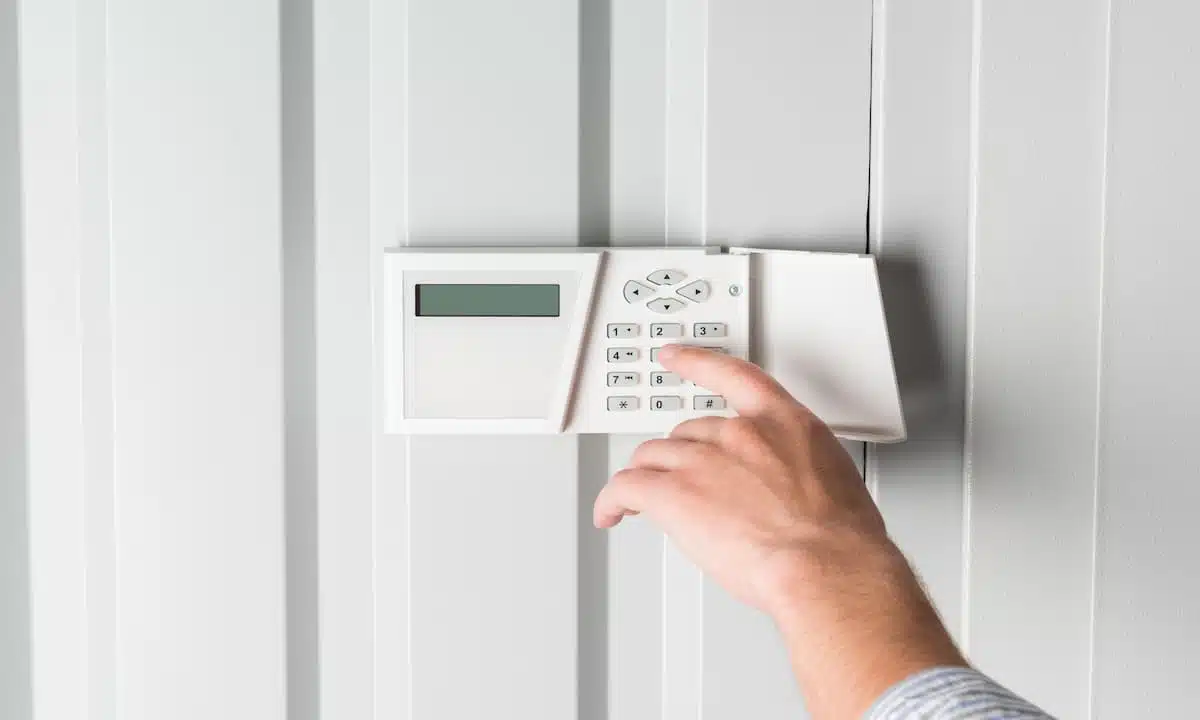
If you're shopping for a home alarm, you've probably already noticed the problem: every manufacturer claims to have "the best system on the market." In this guide we objectively compare the two major categories — professionally monitored and self-managed DIY systems — with real pricing, so you can decide based on your situation, not marketing copy.
Types of home alarm systems
Before comparing prices, it helps to understand that there are two product families that often get confused:
Professionally monitored alarms
A monitoring center receives the alert in real time and, depending on the protocol you've set up, contacts the occupants, a trusted neighbor, or directly the police or fire department. These typically require professional installation and a monthly fee.
DIY (self-monitored) alarms
You install the sensors yourself (usually tool-free, with adhesive strips) and receive alerts directly on your phone. Some brands offer optional professional monitoring layered on top of the same DIY hardware, combining the best of both worlds.
Comparison: professional monitoring vs. DIY
| Criteria | Professional monitoring | Self-monitored DIY |
|---|---|---|
| Upfront equipment cost | Medium-high (often includes install) | Low-medium |
| Monthly fee | ~$25-50 | ~$0-20 (optional) |
| Installation | Professional technician | Self-installable in 1-2 hours |
| Emergency response | Monitoring center calls emergency services automatically | Depends on you reacting to the notification |
| Contract commitment | Common (12-36 months) | Rare |
| Best for | Frequent travelers or anyone wanting a guaranteed response | Anyone wanting flexibility and full control |
The real annual cost, over 3 years
Sticker price rarely tells the full story. Here's a rough side-by-side of what each option actually costs once you factor in monitoring fees over time:
| Cost item | Professional monitoring | Self-monitored DIY |
|---|---|---|
| Equipment (year 1) | $200-600 | $150-400 |
| Monthly fee × 36 months | $540-1,800 | $0-720 |
| Typical 3-year total | $740-2,400 | $150-1,120 |
The gap widens the longer you keep the system, since the monthly fee compounds while DIY hardware is mostly a one-time cost. If you plan to move within a year or two, that also matters — some professional contracts charge early-termination fees, while DIY hardware usually travels with you.
Homeowners insurance discounts
Many home insurance providers offer a discount — commonly in the 5-20% range on the security-related portion of your premium — for having a monitored alarm system installed. A few things worth checking with your insurer before you buy:
- Whether the discount requires professional monitoring specifically, or whether a self-monitored smart system with video verification also qualifies.
- Whether they require a UL-certified system or a specific type of certification.
- Whether the discount is a flat percentage or scales with additional devices (cameras, smoke detectors, water sensors).
Even a modest insurance discount can offset a meaningful chunk of a monitoring plan's monthly cost over a few years, so it's worth a five-minute call to your insurance provider before you commit to a specific system.
What to expect during installation
For professionally installed systems, a technician typically visits for 2-4 hours: mounting sensors on doors and windows, placing motion detectors, installing the control panel, and walking you through the mobile app. For DIY systems, expect:
- Unboxing and pairing the hub with your wifi — usually 10-15 minutes.
- Placing door/window sensors using the included adhesive strips, aligned so the two halves sit within about half an inch of each other when closed.
- Positioning motion sensors in corners with a clear view of the main walkway, away from heat vents or direct sunlight (both can trigger false alarms).
- Testing every sensor individually through the app before arming the system for real — this is the step people skip most often, and it's how false alarms slip through later.
How to choose based on your situation
- You live alone and travel often: prioritize professional monitoring with cellular backup — you need someone to act even if you can't see the notification in time.
- Tight budget: a DIY system with no monthly fee, covering doors/windows plus one indoor camera, handles most opportunistic break-ins.
- Larger home or multiple entry points: look for systems that expand in modules; check the price of extra sensors before buying the base kit, since that's where hidden costs usually hide.
- High-crime area: pair an alarm with visible outdoor cameras — the deterrent effect of a camera in plain sight significantly reduces attempted break-ins.
Common mistakes when signing up for an alarm
- Not reading the cancellation policy. Some contracts auto-renew if you don't cancel weeks in advance.
- Underestimating how many sensors you need. A basic 3-sensor kit rarely covers a mid-sized home with several windows.
- Ignoring compatibility with your existing smart home setup. If you already have cameras or smart locks, check that a new system integrates with them before buying.
- Not testing the siren before you leave the house. A quiet or poorly placed siren loses much of its deterrent effect.
Frequently asked questions
How much does it cost to install a home alarm system?
Basic equipment usually costs between $150 and $500 depending on the brand and number of sensors. If you choose professional monitoring, add a monthly fee of roughly $15 to $50 on top of that.
Is professional monitoring better than a self-monitored DIY alarm?
It depends on your budget and risk tolerance: professional monitoring guarantees someone acts even if you can't respond, while self-monitored DIY alarms are cheaper long-term but rely on your own response to every alert.
Do I need a long-term contract to get monitored alarm service?
Many traditional providers require 12 to 36 month contracts, while newer DIY-oriented brands usually offer month-to-month plans with no commitment. Always check the fine print before signing.