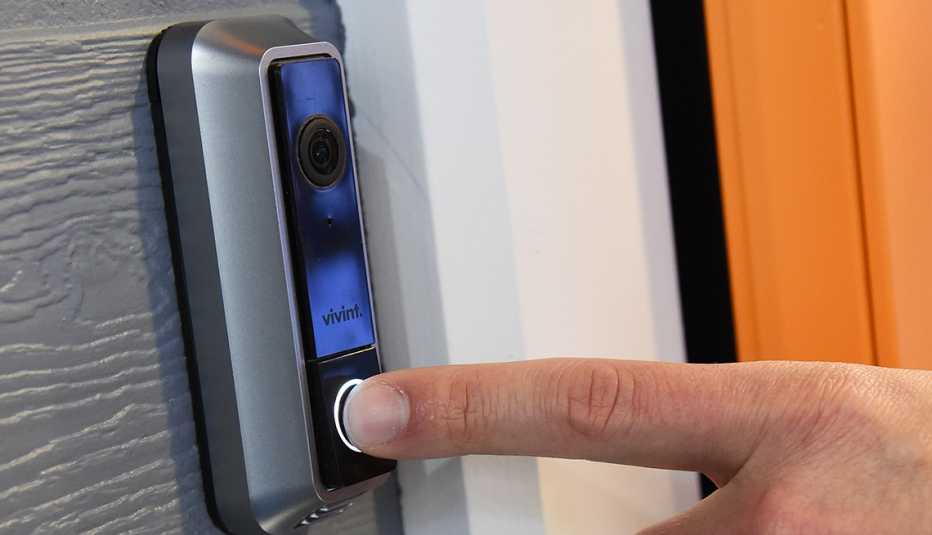
A video doorbell is often the single highest-impact device you can add to your home's security setup — it sits at your most common entry point and doubles as a package-theft deterrent. This guide covers the decisions that actually matter: power source, subscription costs, field of view, and how it interacts with the rest of your setup.
Wired vs. battery-powered doorbells
This is the first fork in the road, and it affects both installation and day-to-day reliability:
| Criteria | Wired | Battery-powered |
|---|---|---|
| Installation | Reuses existing doorbell wiring (or needs a transformer) | Screws into any wall, no wiring needed |
| Renter-friendly | Usually not (permanent wiring changes) | Yes, easy to remove when you move out |
| Uptime | Always on, no charging gaps | Needs recharging every 1-3 months typically |
| Existing chime compatibility | Can often trigger your existing mechanical chime | Usually relies on app notifications only |
If you own your home and already have doorbell wiring, wired is generally the better long-term choice simply because there's one less thing to maintain. If you rent, or your home has no existing doorbell wiring, battery-powered is the practical default.
Do you need a subscription?
Most video doorbells work without a paid plan for the basics: live view on demand and a push notification when motion or a person is detected. Where subscriptions typically come in:
- Video history — reviewing footage from more than the last few hours (or at all, on some brands) usually requires a paid cloud plan.
- Person/package/vehicle detection — smarter alerts that filter out cars driving by or leaves blowing in the wind are often gated behind a subscription.
- Activity zones — restricting motion alerts to a specific area (like your porch, not the street) is sometimes free, sometimes paid, depending on the brand.
If reviewing footage after the fact matters to you — which it usually does, since that's the main use case after a package theft — budget for the subscription cost as part of the doorbell's real price, not as an optional extra.
Field of view and video quality
A narrow field of view is one of the most common regrets with video doorbells. Look for at least a 150-160° diagonal field of view so you capture porch-to-porch activity, not just whoever is standing directly in front of the door. Vertical field of view matters too — a taller aspect ratio catches packages left on the ground, not just faces at eye level. For resolution, 1080p is the practical minimum; 2K adds real value here since doorbell footage is often reviewed after the fact, zoomed in on a face or a license plate.
Package theft: does a doorbell actually help?
A visible video doorbell has a measurable deterrent effect against opportunistic package theft — most porch thieves are looking for an easy, unwitnessed grab, and a visible camera and audible "you are being recorded" announcement (a feature on many models) removes that. That said, a doorbell alone won't stop a determined thief. Pairing it with a simple habit — requiring a signature for high-value deliveries, or using a delivery locker — closes the gap a camera alone can't.
Common mistakes when buying a video doorbell
- Mounting it too high or at the wrong angle. Follow the manufacturer's recommended mounting height (usually around 48 inches) — too high and you lose package/face detail; too low and you miss taller visitors.
- Ignoring your existing chime. Some wired models silence your mechanical in-home chime unless you add an adapter — check this before installing if you rely on hearing the doorbell ring.
- Skipping the subscription cost in your budget. As above — factor it in from the start rather than being surprised later.
- Poor wifi coverage at the front door. A doorbell with a weak signal will drop notifications and lag on live view; a wifi extender near the entryway often fixes this cheaply.
Frequently asked questions
Do I need an existing doorbell to install a video doorbell?
No. Battery-powered video doorbells mount anywhere near your door and need no wiring at all. Wired models can reuse your existing doorbell wiring, but most also include a plug-in adapter if your home doesn't have compatible wiring.
Do video doorbells require a monthly subscription?
Live view and motion alerts usually work without a subscription. A paid plan is typically required to save and review recorded video history beyond the last few hours, and for features like person detection zones or package alerts.
Will a video doorbell drain my phone's data or battery?
Notifications use minimal data, and viewing a live feed uses roughly the same data as a short video call. It has no meaningful impact on your phone's battery unless you're actively watching the live feed for extended periods.