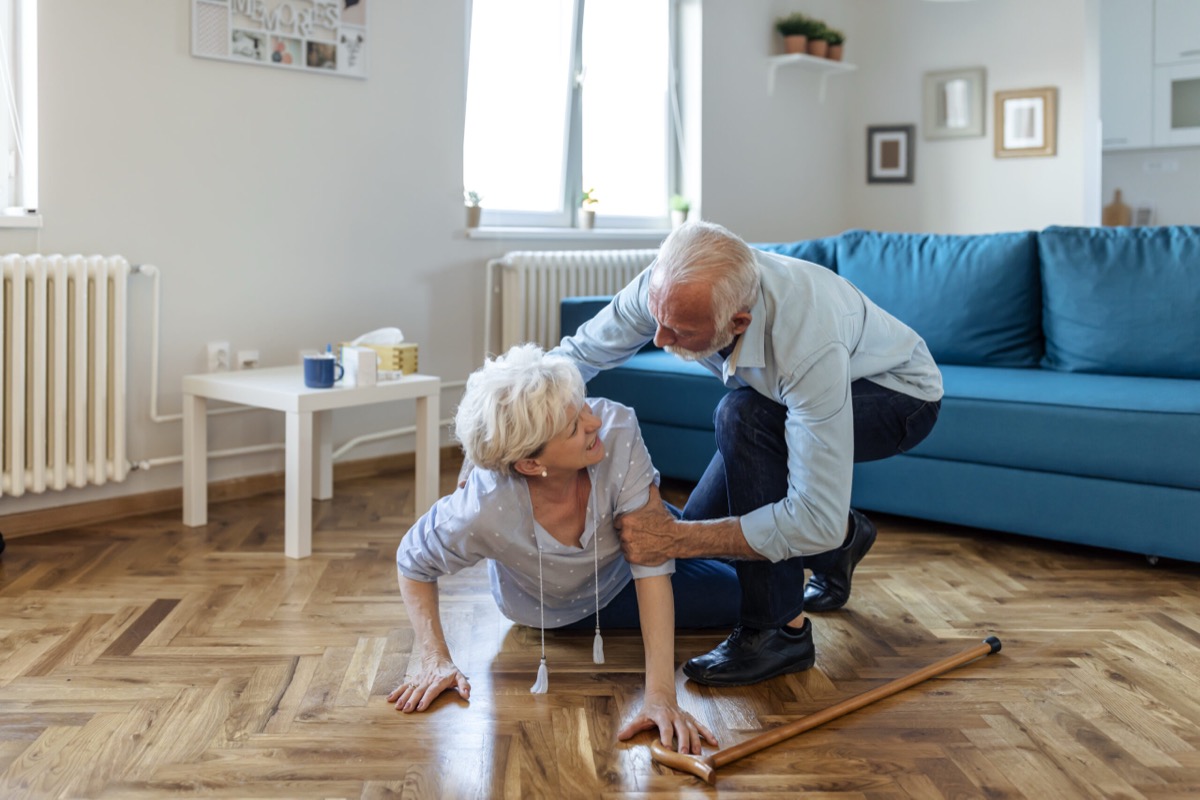
Most home security content focuses on keeping intruders out. For a household with an older adult living independently, the more statistically likely emergency is a fall or a medical event with no one nearby to help — which changes which devices actually matter most, and how you should set up alerts.
Why standard security systems miss what matters most here
A typical alarm system is built to detect an outside threat entering the home. For an aging-in-place setup, the more common risk is inside the home already — a fall in the bathroom, a medical event, or simply not answering the phone for longer than usual. None of that trips a standard door or motion sensor, which is why this category of device looks different from the rest of what we cover on this site.
Fall detection: wearables vs. sensor-based systems
| Device type | What it detects | Who gets notified | Monthly cost range |
|---|---|---|---|
| Wearable fall-detection pendant | Sudden falls, via accelerometer | Monitoring center, then family/EMS | $20-45 |
| Manual help-button pendant | Nothing automatic — press to call | Monitoring center, then family/EMS | $15-35 |
| In-home motion sensors (routine-based) | Unusual inactivity, not falls directly | Family members via app | $0-15 |
| Smart watch fall detection | Sudden falls, via accelerometer | Emergency contacts set in the watch app | Included with cellular watch plan |
Automatic wearable fall detection is the closest thing to true peace of mind for a fast response, since it doesn't rely on the person being conscious or able to press a button. It isn't perfect — a slow fall or one onto carpet can occasionally go undetected — so most safety-focused households pair it with a manual button as a backup rather than relying on either alone.
Setting up alerts a family member receives
The person living in the home usually isn't the one who should be managing a monitoring dashboard — that responsibility typically falls to an adult child or other family caregiver. Most fall-detection and routine-monitoring systems let you add secondary contacts who receive alerts directly, separate from (or in addition to) a professional monitoring center. This is also where clear alarm response steps matter — a household member should know in advance exactly what an alert means and what to do next.
Balancing safety monitoring with privacy and independence
Cameras in bedrooms or bathrooms are usually the wrong tool here, both for privacy and because they don't actually solve the core problem. Sensor-based routine monitoring — a sensor on the bedroom door that flags if it hasn't opened by a normal time, for example — gives family a genuine safety signal without constant visual monitoring, and tends to be far better received by the person living independently.
Frequently asked questions
Do fall-detection wearables replace a medical alert necklace?
Not entirely — wearable fall detectors are a newer addition to the medical alert category and work automatically, but they occasionally miss slow falls or fail to trigger for a fall onto a soft surface. Many families use both: a wearable for automatic detection plus a manual help button as backup.
Can family members get camera alerts without the older adult feeling watched?
Yes, if you set it up deliberately. Motion sensors on doors and in hallways (rather than cameras in living spaces) can alert family to unusual activity, such as a door not opening by a certain time, without placing a camera in a room where someone spends most of their day.
What's the most important single device for aging-in-place safety?
For most families, a fall-detection medical alert device (worn or wall-mounted) is the highest-priority single addition, since falls are the leading cause of injury-related hospitalization for older adults living alone, and a fast response time matters more here than almost anywhere else in home security.